

The key takeaways:
- Rich, warm timber tones, deep Jarrah reds and chocolate hues are replacing pale woods, bringing sophistication back to Australian homes.
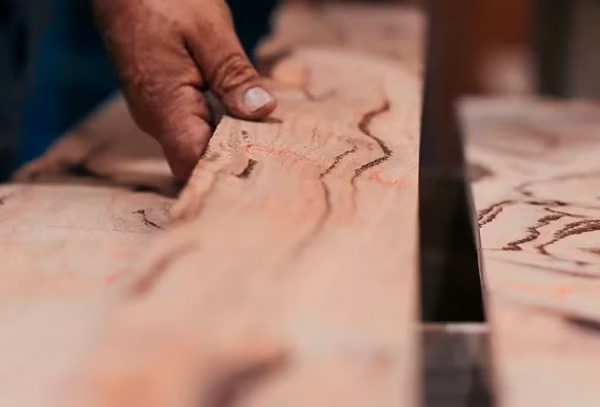
- Natural grain is celebrated: knots, gum veins and markings are features, not flaws, with each piece telling its own story.
- Timber-rich interiors reduce stress and boost wellbeing, making hardwood furniture both beautiful and beneficial.
- Soft, organic curves and flowing forms now outshine sharp edges, making spaces feel more inviting.
- Mixing materials, timber with stone, brass, or matte black, creates a collected, personal look over showroom uniformity.
- “Buy once, buy well”: Homeowners are choosing solid hardwood furniture that’s built to last and visibly crafted, with dovetails and hand-finished details.
- Provenance matters: locally sourced and reclaimed timbers with unique stories are highly valued.
- Layering timber tones, Jarrah, Marri, Tasmanian Oak, adds depth and interest, moving away from matching sets.
- Custom-fit furniture, made for your space and lifestyle, is now preferred over off-the-shelf solutions.
Timber has always held a place at the heart of Australian homes. But this year, something’s shifted. After a decade of pale, bleached woods and cool minimalism, we’re seeing homeowners and designers reach for pieces with more warmth, more character, and more staying power.
This isn’t about chasing fleeting trends. It’s about a deeper realignment between what we want from our spaces: comfort, authenticity, connection to nature, and what solid timber furniture naturally offers. Rich reds, dramatic grain patterns, curved forms that echo the landscape: these aren’t design gimmicks. They’re qualities that have drawn Australians to native hardwoods for generations.
Here are ten timber furniture trends shaping Australian interiors right now, and what they mean for anyone building a home designed to last.
1. Rich, warm timber tones replace bleached woods

The pendulum has swung. Pale, ashy timbers that dominated interiors for years are giving way to deep, warm tones that anchor a room and make it feel lived-in. Colour expert Maria Killam puts it simply: “Move over bleached, greyed and ashy wood tones, deep warm wood is back.”
For Western Australian hardwoods, this shift is significant. Jarrah‘s rich burgundy-to-chocolate palette, colours that deepen naturally over time, sits perfectly within this trend. Where Jarrah was once passed over for lighter Scandinavian-style options, its dramatic warmth now commands attention.
Picture a family gathering around a Jarrah dining table that’s darkened beautifully over five years of Sunday roasts and birthday cakes. The timber’s deep red tones ground the room, creating what designers call “grounded sophistication”, a space that feels substantial and welcoming rather than transient.
2. Natural grain takes centre stage
Gone are the days of heavily stained timber that conceals its origins. Today’s furniture celebrates wood for what it is: knots, gum veins, natural colour variations and all. As Hudson Furniture Australia notes, this aesthetic “celebrates imperfection; every knot adds character.”
This trend plays directly to Marri‘s strengths. Its signature dark red gum veins (called kino) create dramatic patterns that no synthetic material can replicate. Each slab is completely unique, a fingerprint of the tree it came from.
Imagine running your hand across a Marri coffee table, feeling the slight texture where natural fissures have been preserved rather than filled. The piece isn’t flawless, it’s irreplaceable. That distinction matters to homeowners tired of furniture that looks identical to a thousand others.
3. Biophilic design makes timber essential, not decorative

Biophilic design, the practice of incorporating natural elements to improve well-being, has evolved from an emerging concept to a foundational principle. And the science behind it is compelling.
A Forest & Wood Products Australia study of 1,000 Australian workers found those in spaces with less than 20% natural wood surfaces were up to 30% less satisfied with their working life. University of British Columbia research demonstrated that rooms with approximately 45% timber surfaces lowered blood pressure and reduced sympathetic nervous system responses more effectively than plants alone.
This isn’t about following a trend; it’s about understanding why we’re drawn to timber in the first place. The connection runs deeper than aesthetics. For a Perth family working from home, a Tasmanian Oak desk isn’t merely functional. It’s quietly reducing stress and improving focus, backed by peer-reviewed research.
We’ve noticed more clients asking about bringing timber into spaces beyond the obvious. Bedside tables, bathroom vanities, home office desks, anywhere they spend meaningful time. The research suggests they’re onto something.
4. Soft curves bring warmth and welcome
Sharp edges and boxy silhouettes are softening. According to the 1stDibs Trend Report, 43% of designers identified curvy and irregular-shaped furniture as a defining trend this year.
The appeal is both practical and instinctive. Research published in Psychological Science found that people naturally associate rounded forms with warmth and comfort. Curves feel more intuitive, more human, echoing the flowing lines found in timber itself and in the natural landscapes of the Australian bush.
Think about an oval Marri dining table with gently rounded edges. Children don’t bump corners rushing past. Adults reach naturally for bread rolls without navigating sharp angles. Conversation flows around its organic form. It’s furniture designed for how families actually live, not how showrooms photograph.
This trend extends to vanities with sweeping bow fronts, sideboards with gentle fluted details, and bedroom furniture with softened profiles. The craftsmanship required is more demanding, curves demand careful shaping and finishing, but the results transform a room’s entire feel.
5. Mixed materials create collected, personal spaces
The mono-material look is fading. Homeowners want interiors that feel curated over time, not purchased in a single transaction. According to Moe’s Home’s Design Survey, 76% of designers identified stone as a leading material pairing, signalling an appetite for timber combined with complementary textures.
Key pairings gaining traction: timber with marble or travertine, creating warmth against cool precision. Timber with brass or brushed gold, particularly stunning with Jarrah’s deep reds. Timber with matte black metal for a contemporary edge that still feels grounded.
A custom sideboard might feature a Jarrah top with brushed brass handles and legs. The rich red timber plays against warm metal, creating visual interest that mass-produced furniture cannot achieve. It looks “collected rather than coordinated,” as one designer put it, like a piece that found its place over the years, not a catalogue order.
6. The “buy once, buy well” movement
The Australian furniture market is valued at approximately AUD 17 billion, with the sustainable furniture segment projected to grow by AUD 500 million as demand for eco-friendly, locally made pieces accelerates. That growth reflects something fundamental: homeowners are rejecting disposable furniture culture.
The environmental case is stark. Architizer reports that in the United States alone, 12.1 million tonnes of furniture waste was generated in 2018, up from 2.2 million tonnes in 1960, with over 80% ending in landfills. Designer Harry Nuriev observes, “People have started to treat furniture like fashion. We change our minds quickly, move often, and discard things without thinking.”
But attitudes are shifting. Sixty per cent of Australian consumers now prioritise eco-friendly products. Gen Z is leading what’s being called the “Slow Décor” movement, a conscious pushback against disposable culture.
House Digest crystallises the mindset: “Furniture doomed to end up in a landfill within its first few years is out, and investing in heirloom pieces made of solid wood is in.” It’s not about spending more, it’s about spending once. For more on caring for your investment, see our guide on how to clean timber furniture the right way.
7. Visible joinery and hand-finished details
As consumers move toward quality, joinery has become a visible marker of value. Vermont Woods Studios notes that “dovetail joinery is not only beautiful but also incredibly durable, making it a hallmark of high-quality, solid wood furniture.”
The contrast with mass-produced alternatives is technical and tangible. Flat-pack furniture relies on cam locks, cheap screws and weak adhesives applied to MDF and particle board. Hand-crafted furniture uses mortise-and-tenon or dovetail joints that can be repaired decades later.
Interior designer Joyce Huston reports clients “increasingly want furniture where you can see the hand of the maker through intricate details within the natural wood grain.” A chest of drawers with exposed dovetails becomes a conversation piece. Guests pull out a drawer to admire the joinery, understanding they’re looking at something built to outlast trends. It’s the difference between furniture you own and furniture you’re merely storing until it breaks.
8. Timber with a story: Provenance and local sourcing
“Provenance elevates objects from commodity to legacy,” observes design publication Oblist. And homeowners are listening. The demand for furniture with a story, where the timber came from, who shaped it, and what history it carries, has become a significant driver of purchasing decisions.
For Australian makers, this represents both opportunity and responsibility. Reclaimed timber offers tangible environmental benefits: aged timber is up to 40% stronger than newly harvested wood (denser from old-growth forests), and reclaimed furniture’s carbon footprint can be over 50% lower than newly manufactured alternatives.
Consider the difference between “a dining table” and “a Jarrah table crafted from timber salvaged during a mining clearing operation in Western Australia’s southwest, wood that grew for a century before being shaped into furniture that will serve your family for another hundred years.” That narrative transforms a purchase into a legacy. For guidance on pairing timber pieces throughout your home, see our guide on what timber furniture goes with timber floors.
9. Layered timber tones replace matchy-matchy sets
“Mixing wood tones is becoming a defining look,” reports Woodgrain. “Homeowners are moving away from the idea that all wood finishes must match perfectly. Light woods are being paired with medium or dark tones, warm undertones balanced with cooler ones.”
This liberates homeowners from rigid matching. A home might feature Tasmanian Oak flooring, Marri cabinetry and a Jarrah dining table, yet feel balanced and cohesive. The contrast isn’t accidental; it’s intentional layering that adds depth and visual interest, much like mixing textures in soft furnishings.
What’s falling out of favour: identical matching bundle sets, very pale bleached woods, high-gloss finishes with no texture and thin veneer-over-MDF pieces. The future belongs to considered contrast. If you’re uncertain about mixing species, our blog on living room furniture ideas offers practical guidance.
10. Custom fit: furniture sized for your life

One of the clearest shifts this year is a move away from standard sizing. Homeowners want furniture that fits their space properly, not something that “almost works.”
Custom timber furniture puts you in control. A dining table sized precisely for your room and the number of people you typically host. A vanity with drawers and shelves designed around exactly how you use them. A sideboard that spans the wall without awkward gaps or cramped proportions.
We’ve seen more clients asking for wall-hung vanities that make a small ensuite feel twice as open while still providing generous storage for busy mornings. Or dining tables that seat ten comfortably for Christmas but don’t overwhelm the room the other 364 days. These aren’t compromises, they’re solutions you simply can’t find off the shelf.
This trend reflects broader values: furniture crafted with purpose rather than mass-produced to hit a price point. It costs more upfront, certainly. But the piece that fits perfectly is the piece that stays.
Why Australian hardwoods suit these trends
These ten trends share common threads: authenticity, durability, connection to nature, and pieces with character that mass production cannot replicate. Australian hardwoods, Jarrah, Marri and Tasmanian Oak, naturally embody these qualities.
Jarrah (Eucalyptus marginata) offers exceptional durability with a Janka hardness of 8.5 kN, significantly harder than European Oak. Its Class 2 durability rating and natural termite resistance make it ideal for Western Australian conditions. Colours range from deep reds to burgundy, darkening beautifully over decades.
Marri (Corymbia calophylla) provides honey-gold tones with dramatic dark red and black gum veins, creating patterns no synthetic material can replicate. At 7.1 kN hardness, it machines well while maintaining structural integrity. The name derives from the Noongar word for “blood,” referring to its distinctive kino.
Tasmanian Oak (a collective term for E. regnans, E. obliqua, E. delegatensis) offers excellent workability with a Janka rating of 4.9 kN. Its straw-to-pink-brown tones suit contemporary, coastal and Scandinavian interiors. Exceptional staining qualities allow it to match virtually any design scheme.
All three species store carbon throughout their service life, and sustainable sourcing through certified forestry supports environmental stewardship. These aren’t trends to chase, they’re strengths inherent to the material itself.
Bringing these trends home
What unites these ten trends is a return to furniture that matters. Pieces built to last generations rather than landfill cycles. Timber that connects us to nature, supports wellbeing, and grows more beautiful with each passing year.
At Jarrimber, we’ve spent over 15 years crafting custom furniture from Western Australian and Tasmanian hardwoods. Every piece is built to showcase these qualities, whether that’s a sweeping Jarrah dining table with gently curved edges, a textured Marri sideboard with fluted details, or a custom Tasmanian Oak vanity designed precisely for your space.
Because every piece is custom-made, you’re not just getting timber furniture, you’re getting a lasting creation crafted for your home and your lifestyle. From timber choice to size, finish and function, we help you create something that’s truly yours. Explore our dining tables, bedroom furniture and bathroom vanities, or get in touch to discuss your next custom timber project.